
In Switzerland, trust is built on precision. Whether it’s contracts, communication, or payments, businesses are expected to be clear, accurate, and compliant. Invoicing is no exception. A well-structured invoice is a signal of professionalism and reliability. This article focuses on how clear, compliant invoicing helps Swiss businesses build stronger client trust while staying aligned with legal and operational standards. In a market known for high compliance requirements and trusted business practices, unclear or inconsistent invoices can quickly damage credibility. Clear invoicing, on the other hand, reinforces confidence and long-term business relationships.
Swiss Invoicing Standards and Legal Requirements
In Switzerland, invoices are legal and tax-relevant documents. They must include specific information to be compliant, such as:
- Seller and buyer details
- Invoice date and number
- Detailed description of goods or services
- Net amount, VAT rate, and VAT amount (if applicable)
- VAT/UID number
- Total payable amount and currency
These requirements are not optional. Invoices are directly tied to VAT reporting, audits, and financial transparency. Errors or missing information can cause tax issues or payment delays. Additionally, QR-bills have become the Swiss standard for payment information. They allow payments to be processed faster and more automatically for both businesses and clients.
The Link Between Clear Invoicing and Client Trust
Clear invoicing reduces uncertainty. When clients can easily understand what they are paying for, why they are paying it, and when payment is due, trust naturally increases.
Swiss clients often expect detailed and exact documentation. Transparent invoices with itemized charges and clear terms signal that a business is organized, compliant, and dependable. This strengthens not only the current transaction but also future cooperation and referrals.
On the other hand, unclear invoices. missing details, confusing pricing, and incorrect VAT, can lead to disputes, delayed payments, and loss of confidence. Even small errors can have a bad impact on trust in the Swiss market.
Benefits of Clear Invoicing for Swiss Business Operations
Clear invoicing is more than just sending a bill. In Switzerland, where businesses are expected to work with precision and transparency, well-structured invoices bring major advantages.
1. Compliance and Legal Certainty
Switzerland has strict rules about what an invoice must include, especially when VAT applies. Businesses also need to keep financial documents for many years. When invoices are accurate and follow Swiss requirements, companies benefit from:
- Fewer problems during tax audits
- Lower risk of penalties or corrections
- Easier VAT reporting and bookkeeping
- More confidence that all transactions are legally documented
This is especially important for small and medium-sized businesses (SMBs) that are growing and want to stay fully compliant without extra stress.
2. Improved Cash Flow
Clear invoices help businesses get paid faster. When clients receive an invoice with:
- Complete payment details
- Clear due dates
- Transparent pricing
- QR-bill payment options
they can process the payment quickly without needing to ask questions or request changes.
Faster payments mean:
- More stable cash flow
- Fewer overdue invoices
- Better financial planning for the business
3. Professionalism and Brand Reputation
An invoice is often one of the last interactions a client has in the sales process. Therefore, it leaves a lasting impression. In Switzerland, clients expect communication to be precise, well-organized, and trustworthy.
Clear, professional invoices show that a company is reliable and serious about quality. This strengthens the business relationship and can lead to:
- Higher client satisfaction
- Repeat business
- Positive referrals and long-term loyalty
A confusing or messy invoice, on the other hand, can damage trust even if the service was excellent.
4. Reduced Administrative Burden
Unclear invoices create extra work:
- Clients ask questions
- Payments get delayed
- Corrections need to be made
- Teams spend time on follow-ups
Digital invoicing tools and standardized formats (like Swiss QR-bills) reduce these issues by automating and simplifying the process. Many Swiss companies are moving toward electronic invoicing because it reduces manual errors, saves time for accounting teams, improves accuracy, and makes invoice tracking easier.With the right system, businesses can focus less on paperwork and more on serving clients.
Challenges Swiss Companies Face Without Clear Invoicing

When invoicing is unclear or poorly structured, Swiss businesses often run into repeated issues that affect both cash flow and client relationships.
Common problems include:
Manual mistakes and mismatched records
Invoices created by hand can contain errors, such as incorrect amounts, missing invoice numbers, or wrong client details. These mistakes often lead to mismatches between invoicing and accounting systems.
Delayed payments due to missing or confusing information
If an invoice lacks key details, such as payment terms, VAT breakdown, or bank information, clients may hesitate or request clarification before paying. Even small gaps can slow down the payment process.
Reduced client confidence and trust
Swiss clients and international partners expect invoices to be accurate, transparent, and compliant. Unclear documentation can make a business appear unprofessional or unreliable, which can damage long-term relationships.
Higher risks for cross-border business
For companies working with clients outside Switzerland, invoicing becomes even more complex. Businesses must correctly manage:
- VAT regulations and tax documentation
- Currency conversions and exchange rate accuracy
- Different legal and invoicing standards across countries
Failing to meet these requirements can result in disputes, penalties, or delayed transactions.
Keeping up with modern invoicing expectations
Invoicing standards are also evolving quickly. With the rise of e-invoicing requirements and increasing EU-related compliance expectations, Swiss businesses need updated systems that support automation and standard formats.
How Büro 365 Helps with Clear Invoicing and Client Trust

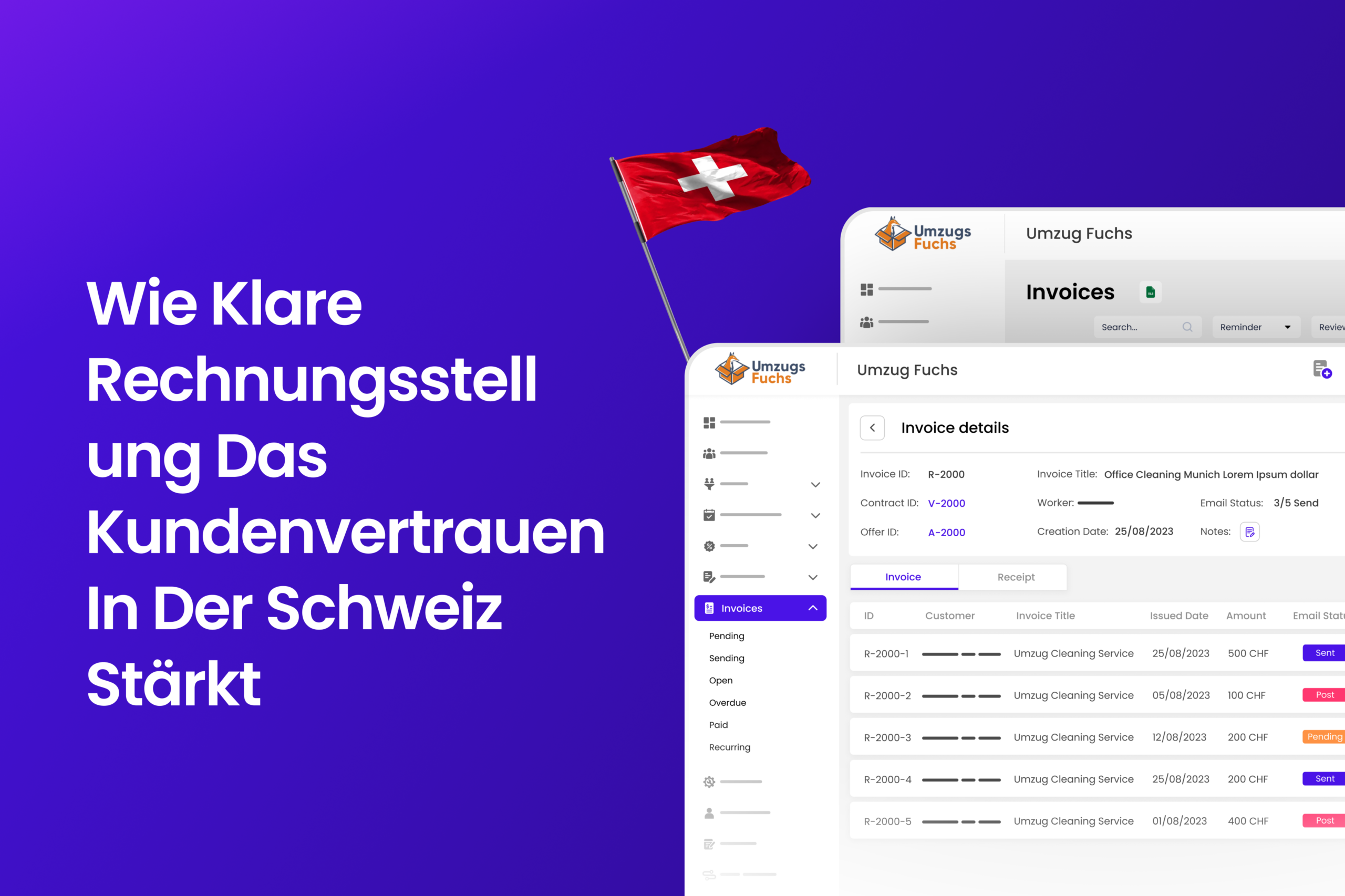
Single Dashboard: Büro 365 keeps invoices, offers, contracts, and communication history in one place. This creates a single source of truth, making it easier to answer client questions and maintain transparency.
Automated and Compliant Invoicing
Invoices are generated with all required elements, including addresses, VAT/UID numbers, and clear descriptions. It reduces the risk of non-compliance or errors.
Integrated Follow-Ups
Automated payment reminders help businesses stay professional and ensure payments arrive on time. This improves cash flow without the need for time-consuming manual follow-ups.
Full Visibility
Businesses can easily see all open invoices, payment statuses, and cash flow in one place. This helps Swiss companies to stay organized and keep good relationships with clients.
Best Practices for Swiss Businesses
- Always use compliant invoice formats with full details
- Send invoices promptly after delivering goods or services
- Use consistent templates and numbering sequences
- Leverage digital invoicing tool and QR-bills to speed up payments
- Clearly state payment terms and due dates
- These small optimizations have a big impact on the trustworthiness and efficiency of your company.
Conclusion
In Switzerland, clear invoicing plays a crucial role in building customer trust. Clear and professional invoices reduce sources of error, help customers pay faster, and lower financial and legal risks. They are a sign of reliability and promote long-term business relationships.
For Swiss SMEs, transparent invoicing supports stable growth by increasing efficiency, ensuring compliance, and strengthening customer trust. With the right system, invoicing becomes easier and can even give a company a real competitive advantage.
FAQs
Why is clear invoicing important for Swiss SMBs?
Clear invoices reduce errors, ensure compliance, and show clients that your business is professional and reliable. This builds trust and strengthens relationships.
What must a Swiss invoice include to be compliant?
Invoices should include seller and buyer info, invoice date, number, detailed item descriptions, price, VAT/UID numbers, and total amount. Using QR-bills is now standard.
How does clear invoicing improve client payments?
Invoices that are accurate and easy to understand get processed faster. Clients can pay on time without confusion, improving cash flow.
Can small teams manage clear invoicing easily?
Yes. Tools like Büro 365 automate invoice creation, reminders, and tracking, making clear invoicing simple even for small or owner-managed businesses.
What happens if invoices have errors or missing details?
Mistakes can delay payments, cause disputes, or damage client trust. Compliance issues can also arise, especially with VAT reporting.
How does digital invoicing help Swiss businesses?
Digital invoicing, including QR-bills, reduces manual errors, speeds up payments, and keeps invoices organized for audits and compliance.



 English
  German